

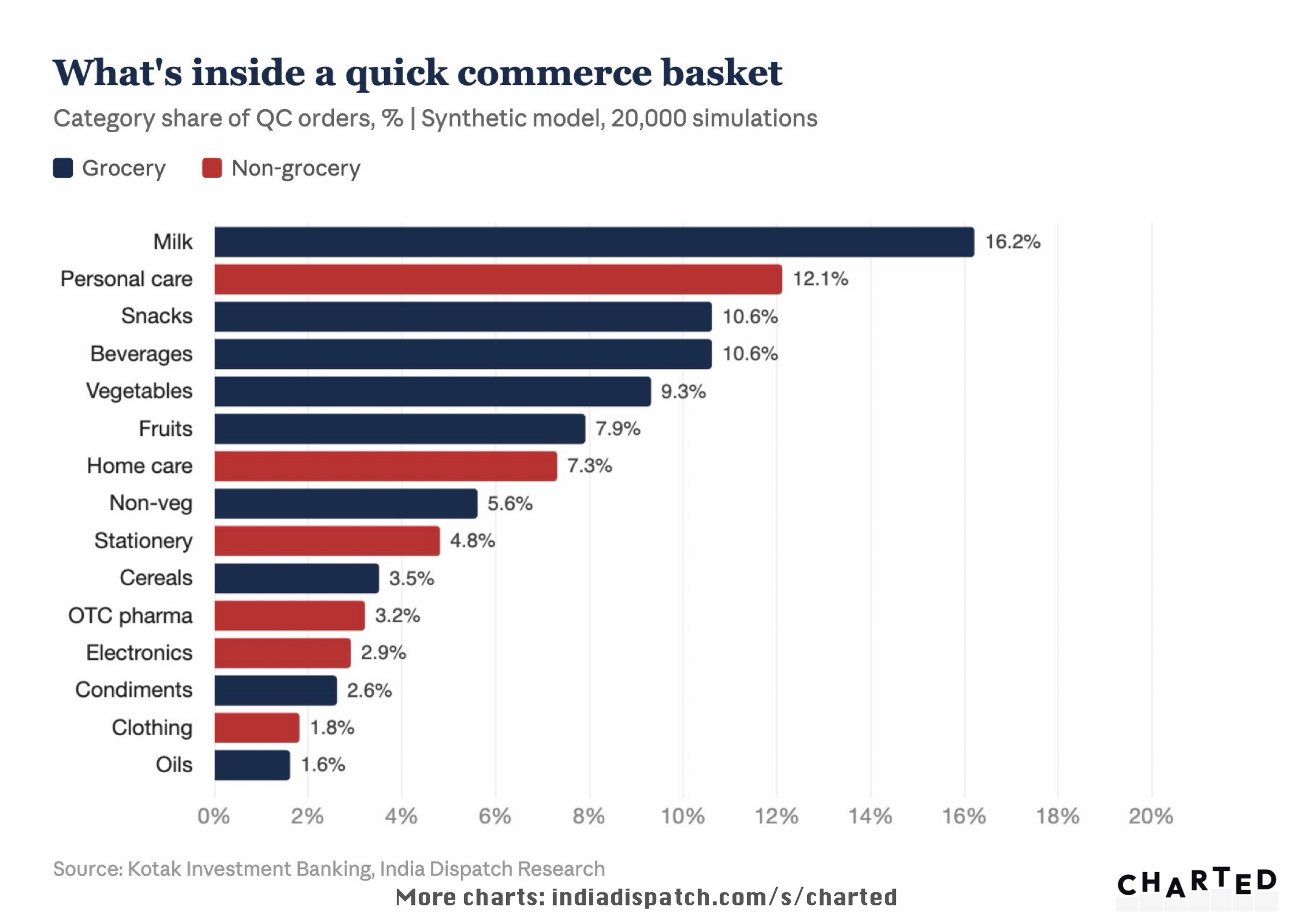
Kotak modeled 20,000 quick commerce order baskets and found that more than half are priced below INR 500, a fat left tail driven by the fact that urban household spending puts a hard cap on how much quick commerce can expand. Only 52% of the consumption basket is addressable by quick commerce at all, the bank concluded.
The model’s central finding is that basket value is more sensitive to supplier pricing — specifically discounts to MRP — than to the number of items per order. Hence, the path to better unit economics runs through harder supplier negotiations rather than nudging customers to buy more.
This Kotak finding matches what the festive numbers just showed. Most Diwali orders came in under Rs 1,000, and the brands whose baskets grew about 14% saw their acquisition cost per rupee of revenue stay almost flat, while brands with shrinking baskets paid 19 to 24% more for the same rupee. Basket size really is the whole game here, whether it is quick commerce or festive.